Understanding the Differences: OpenClaw vs GPT
In the AI community, an open-source project called OpenClaw has been gaining attention, with many claiming it surpasses GPT significantly—not just in accuracy but in its ability to perform tasks, operate computers, and complete workflows autonomously. This article will clarify the fundamental differences between OpenClaw and GPT, its impressive capabilities, and its underlying principles.
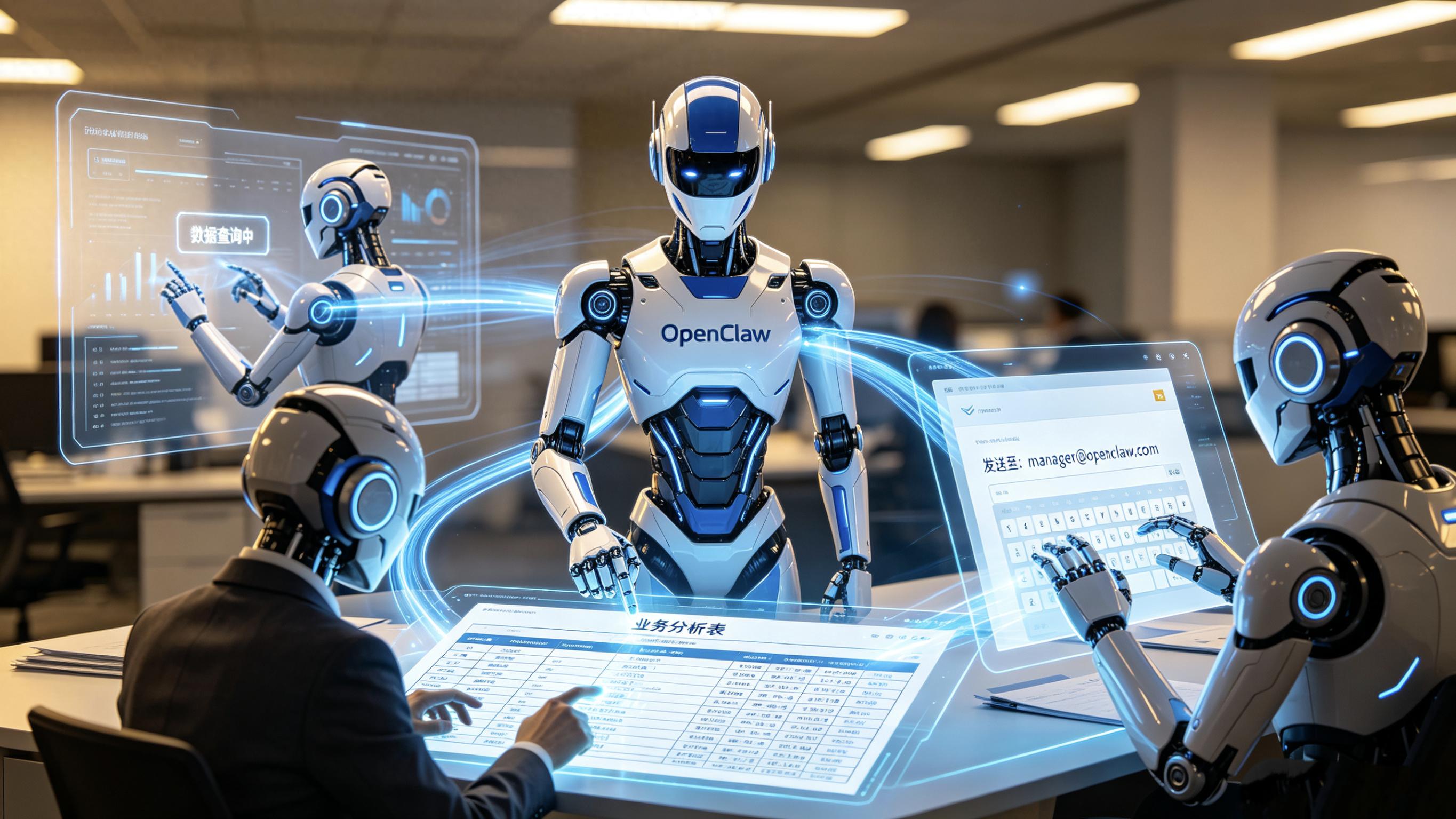
OpenClaw and GPT Are Not the Same
Many assume OpenClaw is a new large model, but this is incorrect. GPT is a large language model (LLM) responsible for thinking, speaking, and writing, while OpenClaw is an AI agent framework responsible for planning, invoking, executing tasks, and can integrate with any large model like GPT, Claude, or DeepSeek as its brain.
Core Positioning: Strategist vs Digital Employee
-
GPT (ChatGPT): Passive responder, provides plans but not actions. If you ask it to organize files, send emails, or create reports, it will only give you written steps and content, requiring you to manually copy, paste, and execute each task. It is confined to the dialogue box, outputting text, code, or images without any operational capabilities.
-
OpenClaw: Proactively executes tasks and completes them autonomously. You might say, “Organize this month’s work files by date, generate a summary report, and email the team,” and it will break down the tasks, open folders, operate Excel, invoke the email client, send the email, and finally inform you that it’s done—completing the entire process without your intervention.
Operational Logic: Textual Loop vs Action Loop
-
GPT: Input question → Understand semantics → Generate text → End. There are no tool calls, system operations, or result verifications; it follows a linear Q&A process.
-
OpenClaw: Receives instructions → Intent parsing → Breaks down into subtasks → Calls tools/skills → Operates local devices → Verifies results → Adjusts and retries → Feedback completion. It follows a complete autonomous loop of thinking, acting, observing, and reflecting, capable of handling complex, lengthy tasks.
Data and Deployment: Cloud Dependency vs Local Priority
-
GPT: Most functions run in the cloud, requiring your data and files to be uploaded to OpenAI’s servers, posing privacy risks, strong network dependencies, and high costs.
-
OpenClaw: Primarily local deployment, with core execution and file operations performed on your own computer, ensuring data remains local and private. It only invokes cloud-based large models when complex reasoning is needed, balancing capability and cost.
In summary, GPT serves as a brainstorming brain, while OpenClaw equips that brain with hands and feet, enabling it to work autonomously.
Why is OpenClaw So Powerful? Three Core Technologies Addressing AI Limitations
GPT struggles with complex long tasks due to context explosion, memory limitations, and difficulty in task division. OpenClaw addresses these issues with three original designs, which are key to its popularity.
1. Layered Context Reading: Solving Memory and Decision Issues
Large models struggle with long contexts and chaotic information, leading to nonsensical outputs. OpenClaw employs Context Window layered reading:
- First, it reads each skill’s summary quickly to grasp key points and understand the task framework.
- Only when details are necessary does it load the complete workflow code/instructions.
- It automatically compresses redundant information, retaining only critical memories, significantly reducing the model’s burden and improving decision accuracy and efficiency.
2. Dynamic Sub-Agents: Automatic Task Division for Complex Tasks
Just as one person cannot handle a large task alone, neither can AI. OpenClaw automatically breaks down complex tasks and dynamically creates sub-agents for collaborative, parallel processing:
- For instance, when creating a market report, the main agent plans while sub-agents gather data, write content, create charts, and format the final output, automatically compiling, verifying, and correcting upon completion.
- There’s no need to preset rules or manually divide tasks; the more complex the task, the more evident its advantages, breaking through the limitations of single models.
3. White-Box Memory System: Long-Term Memory That Improves Over Time
Traditional AI forgets information over time, but OpenClaw uses pure Markdown text to maintain long-term memory:
- Important information, task results, and lessons learned are automatically saved as readable documents.
- Content that becomes too lengthy is automatically summarized, keeping the context clear.
- Memory is editable, transferable, and reusable, effectively giving AI a “notebook” that allows it to become increasingly familiar and proficient over time.
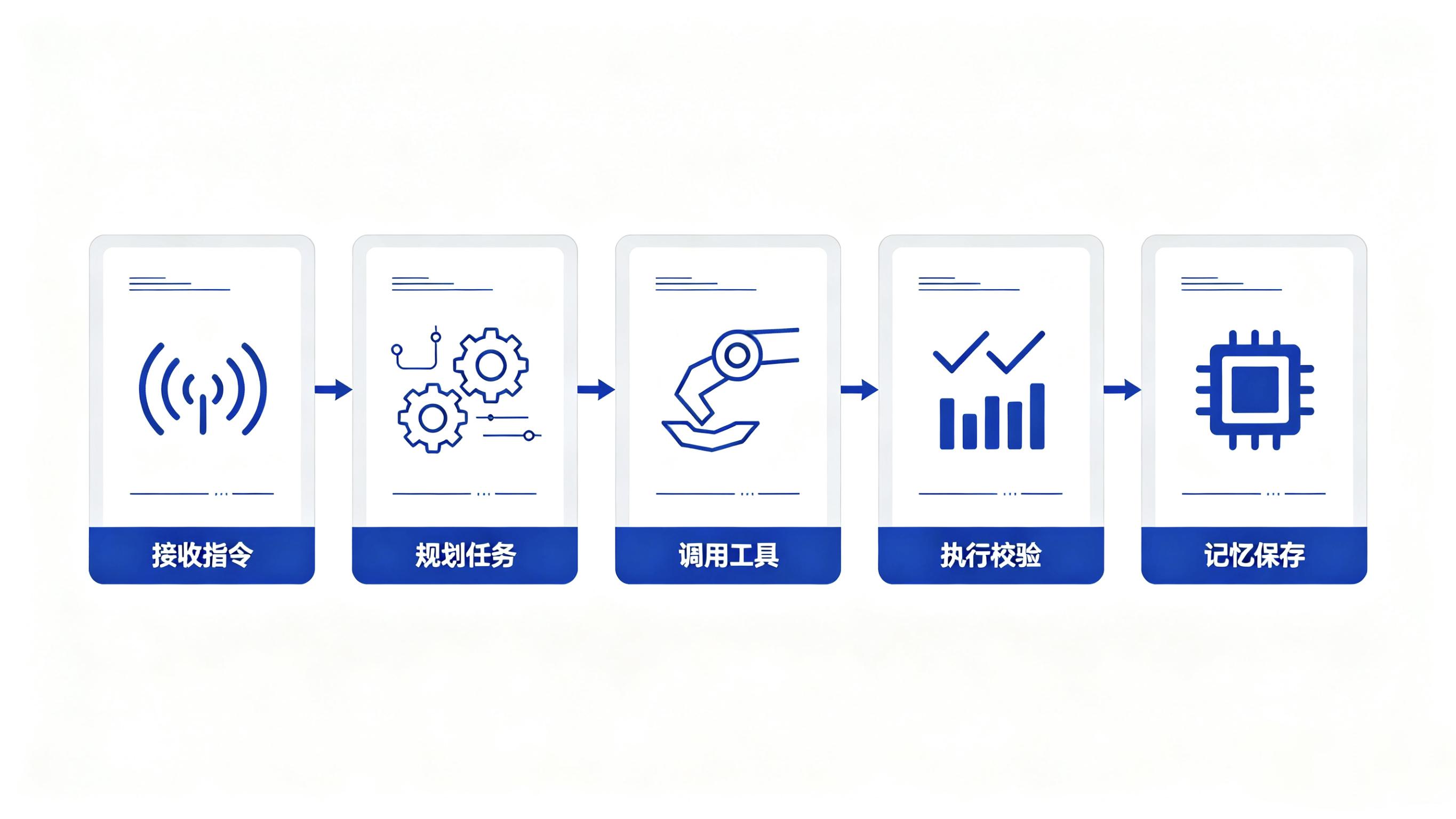
Complete Working Principle of OpenClaw: From Instruction to Completion
Breaking down OpenClaw reveals a complete system of “brain + hands + memory + scheduling” with clear operational logic:
- Receive Instructions: You send natural language requests via Feishu, DingTalk, or WeChat, and the gateway routes them to the agent.
- Understand and Plan: It calls the integrated large model (like GPT-4o) to parse intent, break it down into executable subtasks, and formulate an execution plan.
- Invoke Skills/Tools: It matches the corresponding skill (files, emails, Excel, code, etc.), dynamically creating sub-agents to execute tasks, operate local computers, invoke software, and process data.
- Execution and Verification: After each step, it automatically checks whether the results are correct; if not, it reflects, retries, and adjusts the plan until it meets the requirements.
- Feedback and Memory: After completion, it informs you of the results while storing the entire process and key information in Markdown memory for future reuse.
Conclusion: This is Not an Upgrade, but a Paradigm Shift in AI
GPT has ushered AI into an era of “being articulate,” while OpenClaw advances AI into an era of “being able to act, deliver, and autonomously complete tasks”:
- It does not aim to replace GPT but to liberate it—allowing large models to focus on thinking, creativity, and decision-making without being confined to dialogue boxes.
- For ordinary users, professionals, and developers, this means that repetitive tasks like file organization, report generation, emails, and data processing can be entrusted to OpenClaw, freeing you to set goals and review results.
The rise of OpenClaw marks the transition of AI agents from concept to reality, indicating that future AI capable of working autonomously will be the true productivity tool.
Comments
Discussion is powered by Giscus (GitHub Discussions). Add
repo,repoID,category, andcategoryIDunder[params.comments.giscus]inhugo.tomlusing the values from the Giscus setup tool.